japanese beetle life cycle iowa
The Japanese beetle has four stages in its life cycle two of which can be destructive to your lawn and garden. The female Japanese beetle life span is about 30-45 days during which she can lay about 40-60 eggs.

The Japanese Beetle Has Reached Its Peak Population In Places Across Iowa While Some Areas Of The State Have Not Seen The Bee Japanese Beetles Beetle Japanese
An individual Japanese beetle lifespan is about 30 to 45 days.

. Read customer reviews find best sellers. As this insect moves into other areas its important to understand their life cycle the damage they cause and options for managing them. The adults mate and females lay their eggs in the soil in grassy areas.
Most of the beetles life is spent underground only emerging in the adult phase we all know and loathe. Feeding on grass roots Japanese beetle grubs damage lawns golf courses and pastures. Several extension field agronomists have also reported seeing beetles in new areas this summer.
Growing degree days accumulated base 50F for Japanese beetle adults in Iowa 1 January-14 June 2015. The Japanese beetle Popillia japonica has an annual life cycle. Japanese Beetle Life Cycle.
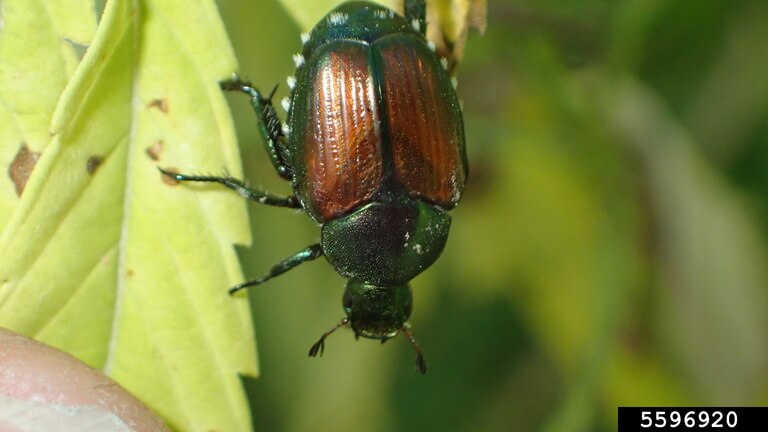
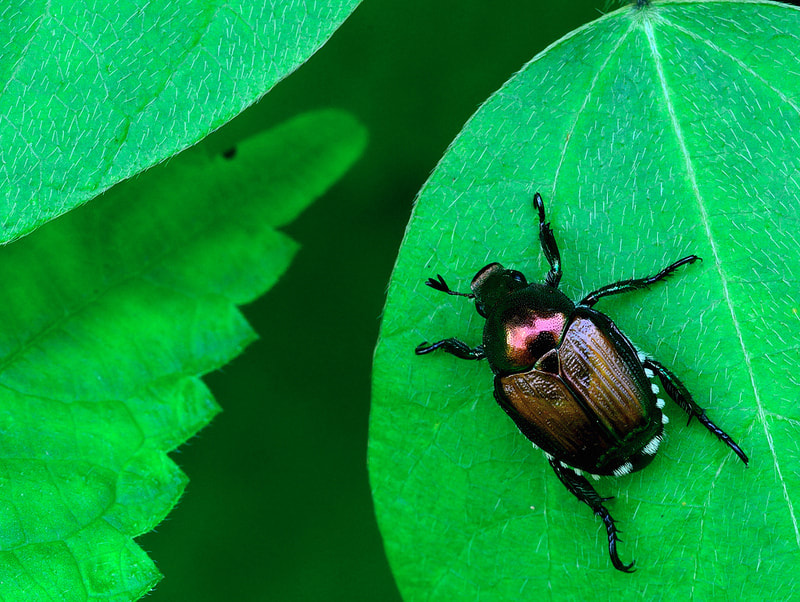
About 12 inch long these eye-catching pests have shiny bronze. You can use an organic product called Milky Spore. The beetle has six small tufts of white hair along the sides and back of its body under the edges of its wings.
The Japanese beetle did not appear in Iowa until 1994 but is now found in over 34ths of the state. Ad Free shipping on qualified orders. 50131 - Johnston Iowa.
HOW TO PREVENT JAPANESE BEETLES. Japanese beetle life cycle starts as an egg that hatches into a white grub then pupates and emerges as a shiny adult beetle. How to Recognize the Japanese Beetles Life Stages.
What is the life cycle of the Japanese beetle. Please enter a valid location. Free easy returns on millions of items.
Japanese beetle larvae are annual white grubs. Females lay eggs in spring when they emerge from the ground. For more on plant selection see Japanese Beetle Food Preferences from Iowa State University.
Life cycle of Japanese beetles. A distinguishing feature of the beetles is five tufts of white. Japanese beetles are similar to other Junebugs in appearance and 38 inch long and 14 inch wide.
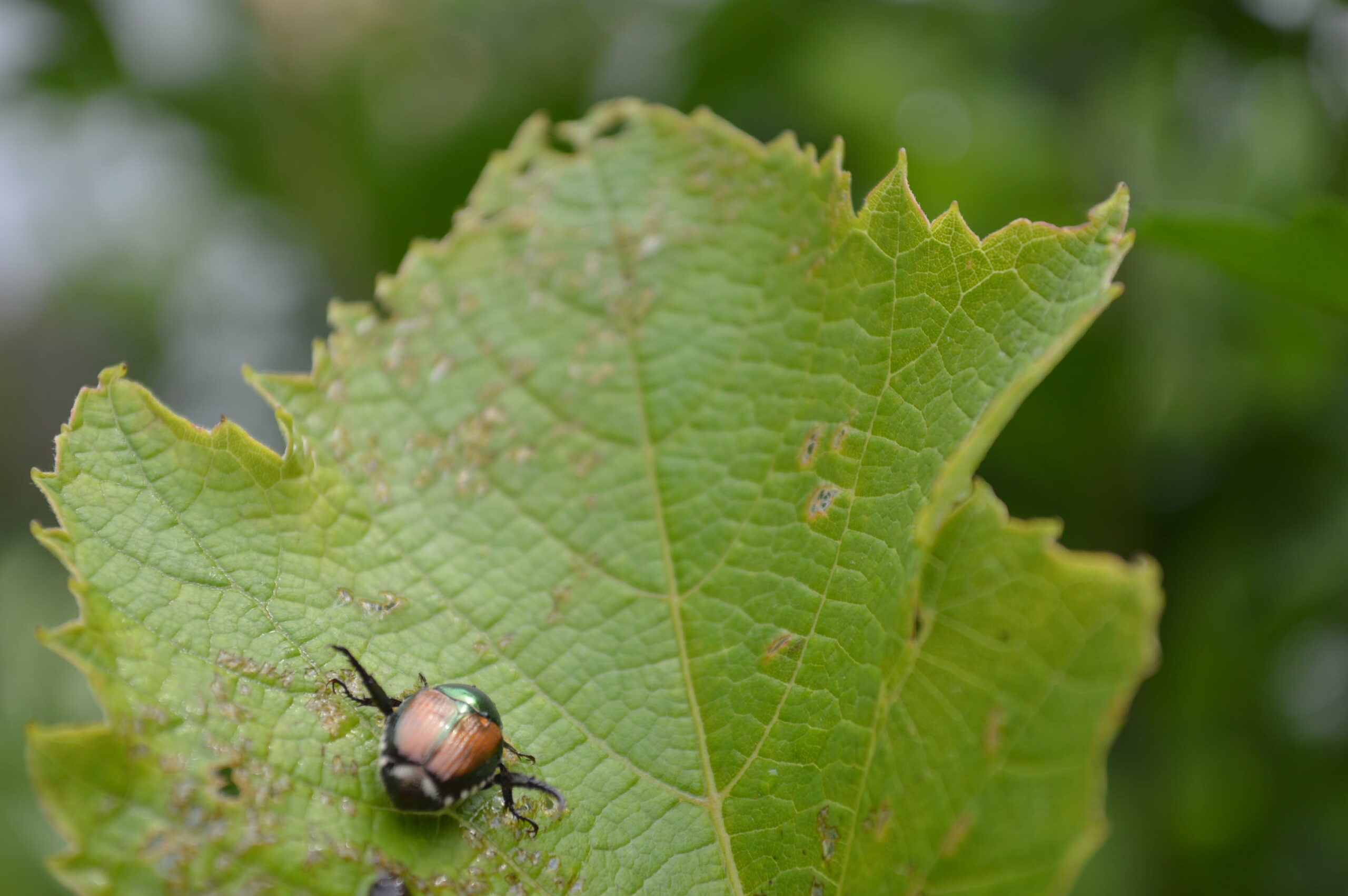
They overwinter deep in the soil and resurface again in spring when soil temperatures rise to feed for another 3 to 4 weeks before emerging as adult Japanese beetles. The head and thorax are shiny metallic green and the wing covers are coppery red. Japanese beetles are often found in field edges or areas of delayed growth.
The Japanese beetle is a highly destructive plant pest that can be very difficult and expensive to control. Adult female beetles lay eggs in the soil in early June. The grubs are C-shaped and approximately 125 inches when fully grown.
These beetles have a bright appearance due to their color combination a metallic green head and thorax and a copper-colored elytra partially covering their abdomen. The most susceptible life stage of the Japanese beetle is the newly hatched grub in the soil. Japanese beetles that were present last summer laid eggs in moist soil covered with grasses turfgrass waterways roadsides etc.
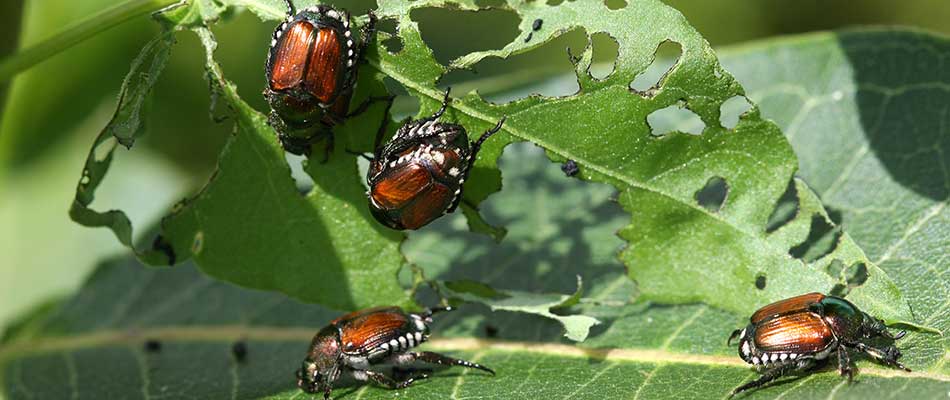
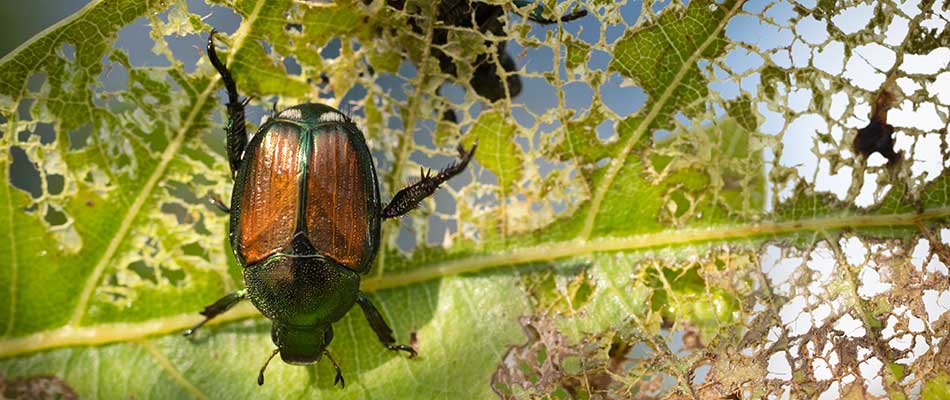
Japanese beetles mainly feed on the leaves of their host plant skeletonizing them in a matter of days. Adult female beetles lay eggs in the soil in early June. Life Cycle of the Japanese Beetle.
Adults emerge from grass in late June and immediately begin to feed on low-lying plants such as roses and. These beetles can feed on more than 300 plant. This is when they are easiest to control.
These eggs hatch late July into August and are small and close to the soil surface. By midsummer the eggs hatch and the young grubs begin to feed. Life Cycle Japanese beetles have one generation per year in Iowa Fig.
Since my June 30 ICM News article about Japanese beetle activity in Iowa there have been many reports of adults feeding in corn and soybean. That is it takes one year to complete the development and growth from egg to adult and there is only one generation per year. Adults begin emergence around 1030 degree days.
Japanese beetle life cycle. The first signs usually appear when mature beetles emerge from the ground in late spring to midsummer often flying in from nearby areas and targeting stressed plants. Japanese beetle damage is magnified because destruction occurs during multiple life stages.
In Iowa adult beetles emerge in mid-June through July. A female can lay up to 60 eggs in her lifetime. Management of Japanese Beetle.
Japanese beetles are similar to other Junebugs in appearance and 38 inch long and 14 inch wide. The adult Japanese beetle is a little less than half an inch long and has a shiny metallic-green body with bronze-colored. The adult Japanese beetle is a little less than half an inch long and has a shiny metallic-green body with bronze-colored outer wings.
During the feeding period females intermittently leave plants burrow about 3 inches into the ground and lay a few eggs. Grub The eggs hatch within the next 8-14 days and tiny grubs emerge out. Browse discover thousands of brands.
JAPANESE BEETLE LIFE CYCLE. In most parts of its range the Japanese beetle completes its life-cycle in one year but some populations in cooler climates may complete their development in two years Vittum 1986. This cycle is repeated until the female lays 40 to 60 eggs.
These large groups can devastate the garden. The males usually are. Adult females lay eggs in moist sod in July.
Appearance of adult the timing of oviposition and subsequent development have been shown to vary with latitude altitude and also from year to year Fleming 1972. Adult Japanese beetles are metallic with white tufts along each side of the body. The eggs hatch in about 2 weeks and the developing Japanese beetle larvae white grubs feed on organic matter and grass roots.
The beetles life cycle takes one year. Japanese beetle adults attack the foliage flowers or fruits of more than 300 different ornamental and agricultural plants. Japanese beetles go through multiple stages in their life cycle.
Corn soybean ornamentals fruit trees grapes weeds. Stage 1 eggs Stage 2 larva instar I II III Stage 3 pupa chrysalis. A row of white tufts of hair can be seen protruding on both sides of their abdomen under their elytra.
Life Cycle Japanese beetles have one generation per year in Iowa Photo 1. The Japanese beetle did not appear in Iowa until 1994 but is now found in over 34ths of the state.
Japanese Beetle Soybean Pest Soybean Research Information Network Srin

How To Prevent Japanese Beetles Lawn Care Blog Lawn Love

Crop Insects To Watch For In June Iowa Agribusiness Network

Doug S Garden Blog They Re Here Time To Protect Your Plants

How Many Japanese Beetles Will You See This Year Horticulture And Home Pest News

Japanese Beetle Food Preferences Horticulture And Home Pest News

Japanese Beetles Expanding Range In Iowa Integrated Crop Management

The Evil Japanese Beetle
Japanese Beetle Control In Des Moines West Des Moines Ankeny Ia A Lawn Landscape

Signs Of Japanese Beetle Infestations Shades Of Green Lawn Landscape

Iowa Be On Lookout For Japanese Beetles Agfax

Japanese Beetles Begin Emergence Integrated Crop Management

Japanese Beetles Emerging In Southern Iowa Integrated Crop Management

10 Ways To Get Rid Of Japanese Beetles Naturally
Japanese Beetle Adult Emergence Begins In Southern Iowa Integrated Crop Management
Japanese Beetle Control In Des Moines West Des Moines Ankeny Ia A Lawn Landscape
Japanese Beetles The Garden Website Com

Is It Japanese Beetle In The Field Or Something Else Integrated Crop Management
Where Have All The Beetles Gone Homegrown Iowan